


Introduction
If you’ve searched for AI virtual staging pricing, you’ve probably noticed the numbers vary wildly — from $15 an image to over $200. That’s because virtual staging real estate tools aren’t priced the same way across the board. Some charge per photo, some per listing, some bundle staging into a monthly subscription.
At Blue Ribbon 3D, we get asked about virtual staging cost almost daily by agents and developers trying to budget their listing photos correctly. This guide breaks down the real pricing in 2026, what drives it up or down, and how it compares to traditional physical staging — so you know exactly what you should be paying before you book a service.
We’ll also cover what actually happens behind the scenes when a room gets staged, which apps and studios are worth using, and how to avoid the common mistakes that make AI-staged photos look obviously fake to buyers. By the end, you’ll have a clear price benchmark and a checklist for choosing the right staging approach for your specific listing.
Quick Answer
| AI virtual staging typically costs $20–$75 per image in 2026, compared to $500–$2,000+ per room for traditional physical staging. Pricing depends on image realism, turnaround time, and whether you use software (self-service) or a professional virtual staging company (full-service). |
What Is AI Virtual Staging?
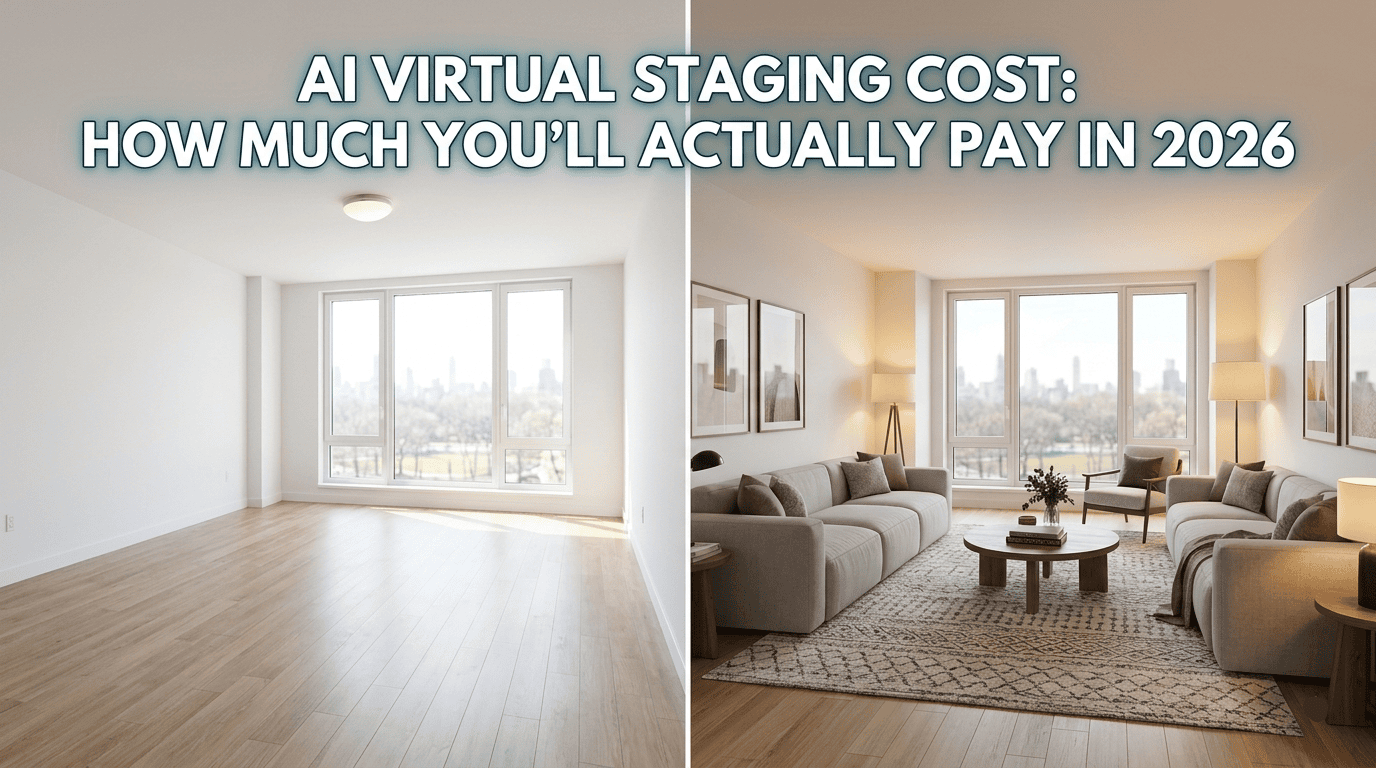
AI virtual staging uses artificial intelligence to digitally furnish and decorate photos of empty or outdated rooms — without moving a single physical piece of furniture. A photo of an empty living room can be transformed into a fully furnished, photo realistic space in minutes.
This has made it a go-to tool specifically for virtual staging for empty houses, vacant listings, and new construction homes where there’s no furniture on-site to photograph.
Behind the scenes, the process typically works in three steps: the AI first analyzes the room’s dimensions, perspective, and lighting from the uploaded photo; it then selects furniture and decor that matches the room’s style and proportions; finally, it renders the composite image with shadows, reflections, and lighting adjusted to look native to the original photo rather than pasted on top of it.
The quality gap between providers is almost entirely in that last step. Cheaper tools often skip proper shadow and lighting matching, which is exactly what gives away a staged photo at a glance. Higher-end studios spend extra render time getting these details right, which is part of why virtual staging cost varies so much between a $10 app and a $75 professional render.
AI Virtual Staging Cost Breakdown (2026)
So, how much does AI virtual staging cost? Here’s a realistic pricing table based on current 2026 market rates:
| Service Type | Price Per Image | Turnaround |
| DIY AI staging app | $10 – $30 | Minutes |
| Professional virtual staging company | $30 – $75 | 24–48 hours |
| Luxury / high-detail staging | $75 – $150+ | 2–4 days |
| Traditional physical staging | $500 – $2,000+ per room | 1–2 weeks |
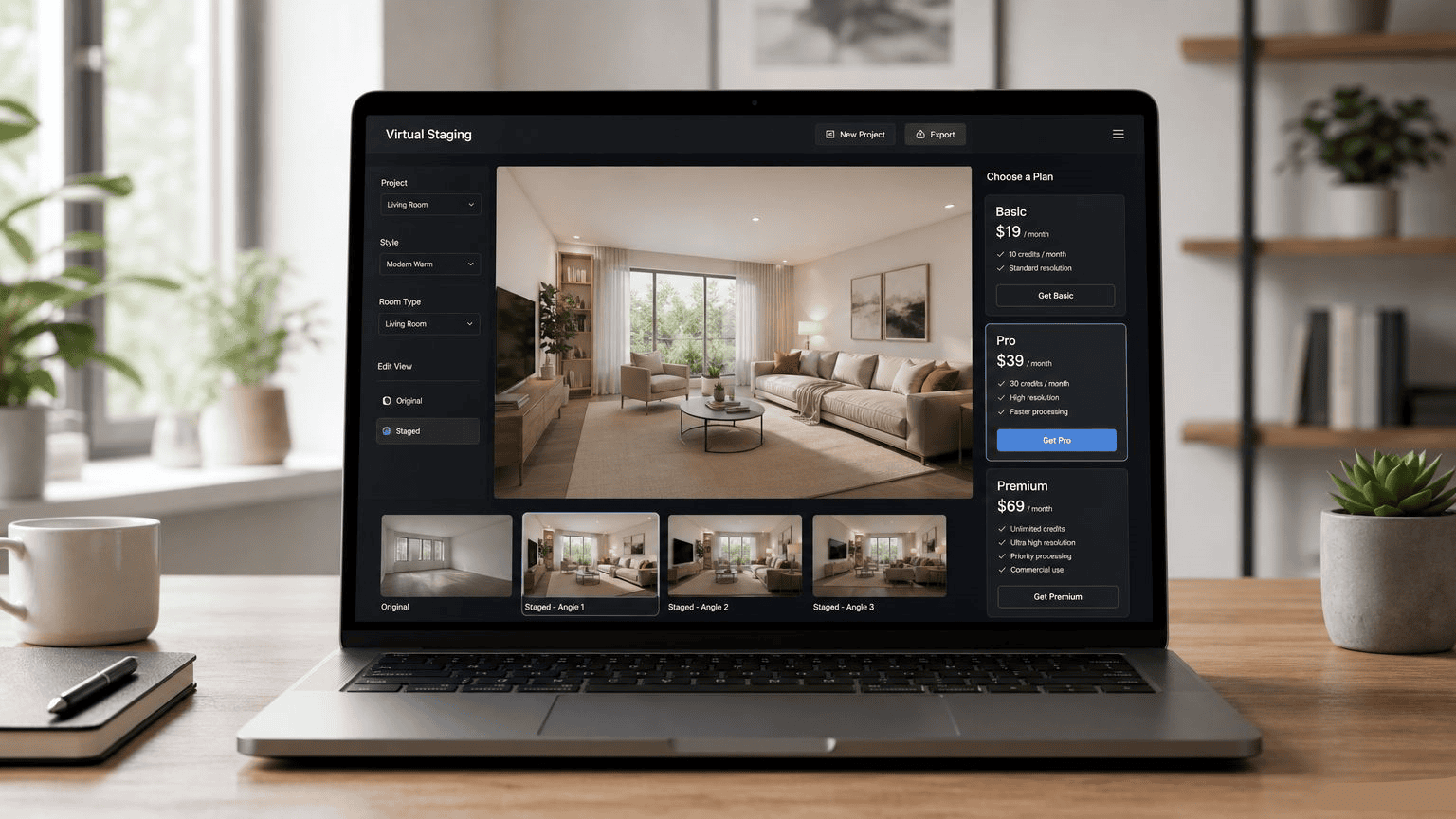
Beyond per-image price, ask what’s included. A cheap $10 render often means one style option and no revisions. A $50–$75 professional render usually includes 1–2 revision rounds, a choice of furniture styles, and MLS-compliant labeling built in — which saves you from having to add a disclosure watermark manually later.
Factors that move the price up: photo realistic level, furniture style customization, MLS-compliance editing, and rush turnaround.
AI Virtual Staging Before and After: What to Expect
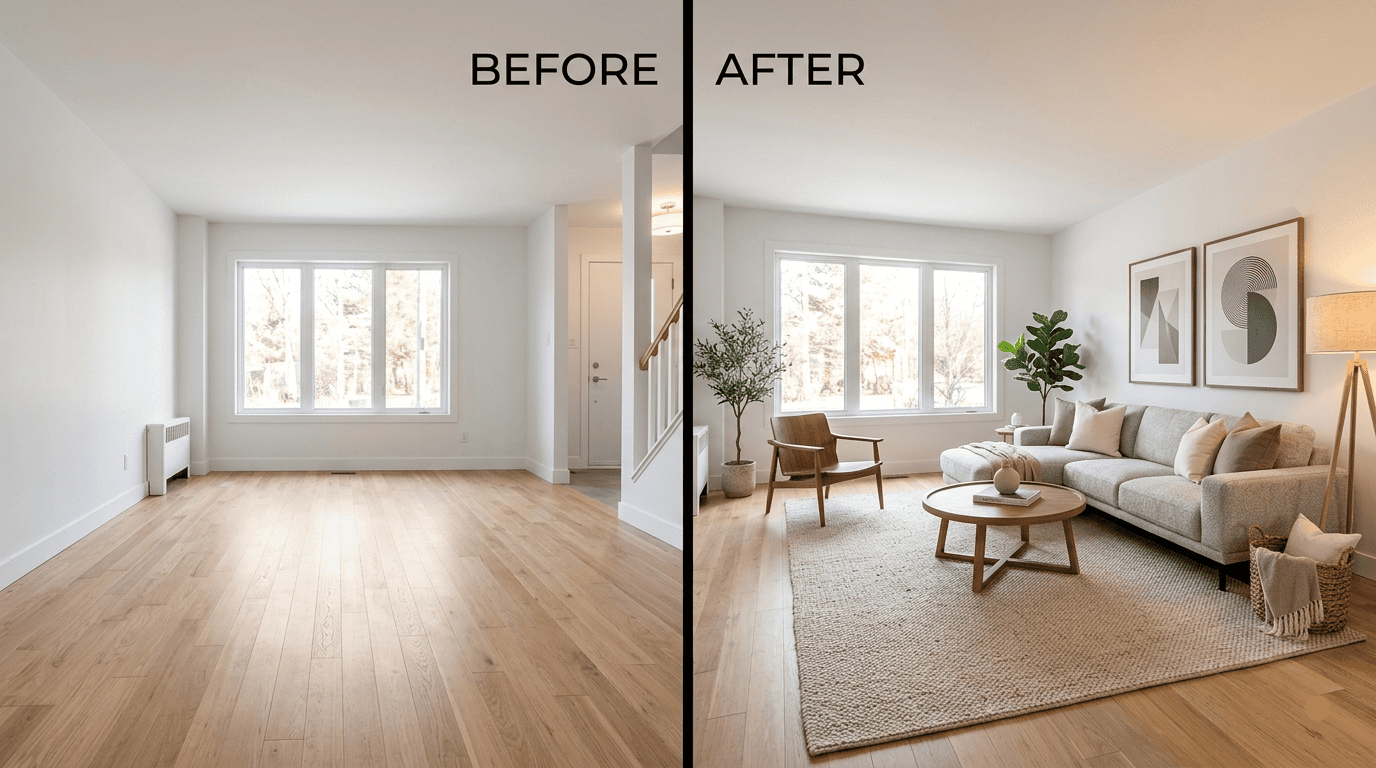
A good AI virtual staging before and after comparison should show more than just added furniture. Look for realistic shadow placement under furniture legs, natural light reflections on floors, and proportions that match the room’s actual ceiling height and window sizes. If the furniture looks flat or floating, that’s a sign of a lower-quality render — and it’s the kind of detail buyers notice even if they can’t explain why a photo feels “off.”
AI Virtual Staging vs. Traditional Staging
The biggest question most sellers and agents ask is whether virtual staging vs traditional staging actually delivers comparable results. Here’s the honest comparison:
- Cost: AI staging is roughly 90% cheaper than physical staging per room
- Speed: AI delivers in hours vs. weeks for furniture delivery and setup
- Flexibility: Styles can be changed instantly (modern, traditional, minimalist) without re-shooting
- Limitation: Buyers touring in person still see an empty room, so physical staging can help for high-traffic open houses
Most agents today use a hybrid approach — physical staging for the primary living space, and AI staging for secondary rooms and MLS photos.
There’s also a maintenance factor worth considering. Physical staging furniture can get damaged, dusty, or shifted between showings, requiring upkeep visits. AI staged photos never degrade — once rendered, the image stays consistent for as long as the listing is live, with zero ongoing cost.
Best Virtual Staging Software & Apps in 2026
If you’re comparing virtual staging software options, most fall into two categories: self-service apps and full-service studios.
Self-Service Apps
These are best for agents on a budget who are comfortable uploading photos and picking a style themselves. Among the best virtual staging apps 2026 has to offer, most use a simple upload-and-generate workflow with a handful of style presets.
Full-Service Studios
For listings that need precise, photorealistic results — especially luxury homes — working with a professional virtual staging company gives you human quality control on top of AI speed. This matters most when photos are going on the MLS and need to look accurate and consistent.
When evaluating either option, check how the tool handles tricky cases — rooms with unusual angles, mixed flooring, or heavy shadows from windows. These edge cases are where cheaper, fully-automated apps tend to struggle, while studios with a human review step catch and fix these issues before delivery.
Is AI Virtual Staging Worth It? ROI for Real Estate
The real question isn’t just cost — it’s return. So is AI virtual staging worth it? Industry data consistently shows that staged listings, including AI virtual staging before and after comparisons, get noticeably more online engagement than empty-room photos.
- Staged listings typically get more clicks and saves on listing portals
- Buyers spend more time viewing staged photos vs. empty rooms
- Furnished photos make it easier for buyers to visualize scale and layout
When you factor in virtual staging ROI real estate data, spending $30–$75 per photo is a marginal cost compared to a home sitting on the market longer. This is a major reason does virtual staging help sell homes faster is one of the most-searched questions among agents in 2026.
It’s worth noting that ROI isn’t just about speed — it’s also about perceived value. Buyers scrolling listing photos online form a first impression in seconds. An empty room can read as “cold” or make it hard to judge whether furniture will actually fit, while a staged photo answers that question instantly and keeps buyers engaged longer on the listing.
Common Mistakes to Avoid With AI Virtual Staging
Even with the right tool, a few avoidable mistakes can undercut the value of virtual staging:
- Over-furnishing a small room, which makes the space look cramped rather than spacious
- Choosing a furniture style that doesn’t match the home’s actual architecture (e.g., ultra-modern furniture in a traditional colonial home)
- Skipping the MLS disclosure label, which can create compliance issues with your local board
- Using low-resolution source photos, which limits how realistic the final staged image can look
- Staging every single room instead of prioritizing the rooms buyers care about most (living room, primary bedroom, kitchen)
AI Virtual Staging for Realtors & Luxury Listings

For agents managing multiple listings, AI virtual staging for realtors has become a volume tool — staging an entire vacant listing in a single afternoon instead of coordinating furniture rentals room by room.
For higher-end properties, virtual staging for luxury real estate requires a different standard — accurate proportions, premium furniture brands, and realistic lighting that matches the property’s actual finishes. Cheap, generic AI staging tends to look obviously fake on luxury listings, which can hurt buyer trust rather than help it.
Luxury buyers are also more likely to zoom into listing photos and compare them against the in-person tour, so consistency matters. A staged photo that shows a sofa style or rug pattern completely different from what’s shown during the walkthrough (in cases where some furniture is physically staged too) can create a jarring, less trustworthy impression.
For agents managing a high volume of listings, the practical workflow is to batch-process standard homes through faster, self-service tools, and reserve full-service studio staging for flagship or luxury properties where image quality directly affects perceived property value.
Choosing a Professional Virtual Staging Company
Before hiring anyone, confirm these three things:
- Are the AI staged photos MLS compliant? (Many MLS boards require a visible “virtually staged” disclosure watermark)
- Do they offer revisions if the furniture style doesn’t match your target buyer?
- Can they handle both empty rooms and outdated/cluttered rooms (object removal + staging)?
It also helps to ask for a sample render of a room similar to yours before committing to a full listing. A quick test image tells you a lot — how realistic the lighting looks, whether the furniture scale feels accurate, and how quickly they turn around a revision if the first draft misses the mark.
Pricing transparency matters too. Reputable providers quote a flat per-image rate up front, rather than a vague “starting at” price that balloons once you add revisions, rush delivery, or MLS labeling as “extras.”
If you’d rather not manage this in-house, many agencies choose to outsource virtual staging services to a dedicated studio, which keeps quality consistent across every listing photo instead of relying on a different app for each property.
Frequently Asked Questions
What is AI virtual staging?
AI virtual staging is the use of artificial intelligence software to digitally add furniture, decor, and finishing touches to photos of empty or outdated rooms, creating a furnished look without physical furniture. It’s become the standard method for preparing vacant listing photos because it’s faster and significantly cheaper than physically staging a home.
How much does AI virtual staging cost?
AI virtual staging typically costs between $10 and $150 per image, depending on the tool or studio. Self-service apps sit at the lower end ($10–$30), while professional virtual staging companies charge $30–$75 per image, and luxury or highly customized renders can run $75–$150+.
Is AI virtual staging worth it?
For most listings, yes. Staged photos consistently get more engagement than empty-room photos, and the cost per image is a fraction of what physical staging or an extended time-on-market would cost. It’s worth less for homes already fully furnished and photographed well, where staging adds little additional value.
Is virtual staging legal for MLS?
Yes, virtual staging is legal for MLS listings in nearly all US markets, but most MLS boards require a disclosure label (such as “virtually staged”) directly on the image so buyers know the furniture isn’t physically present. Failing to disclose this can result in listing violations, so always confirm your local MLS board’s specific labeling requirements before publishing.
How long does virtual staging take?
DIY AI apps can deliver a staged image in minutes. Professional virtual staging companies typically take 24–48 hours for standard turnaround, or longer for rush luxury projects that require extra revision rounds or highly customized furniture selections.
Can you use AI staging for listing photos?
Yes. AI-staged photos are widely accepted for listing photos and MLS use, provided they carry the required virtual staging disclosure and accurately represent the room’s actual layout and dimensions. Misrepresenting a room’s size or structural features through staging can create legal and trust issues, so accuracy matters as much as visual appeal.
What’s the difference between virtual staging and traditional staging?
Virtual staging digitally adds furniture to photos using AI, costing $20–$75 per image with results in hours. Traditional staging involves physically renting and placing furniture in the home, costing $500–$2,000+ per room and taking one to two weeks to set up, but it’s visible to in-person visitors during showings, which virtual staging isn’t.
Does virtual staging help homes sell faster?
Data consistently shows staged listings get more online engagement, longer view times, and more inquiries compared to empty-room photos, which can translate into faster offers. It doesn’t guarantee a faster sale on its own, but it removes one common friction point — buyers struggling to visualize an empty room as a livable space.
Conclusion
In 2026, AI virtual staging has shifted from a nice-to-have to a standard part of listing prep. With virtual staging cost sitting at a fraction of traditional staging, and clear ROI data backing it up, most real estate professionals now treat it as a default step — not an optional upgrade.
The key takeaway is that price alone shouldn’t drive your decision. A $10 render that looks obviously artificial can do more harm to a listing’s perception than no staging at all, while a well-executed $50–$75 professional render pays for itself many times over in buyer engagement. Match the tool to the listing — quick self-service apps for standard homes, and a professional studio for anything luxury, high-value, or MLS-sensitive.
Blue Ribbon 3D combines AI-driven virtual staging with 14+ years of architectural visualization expertise, delivering MLS-ready, photorealistic staged photos for agents and developers across the USA. Get a free quote for your listing photos here.