

Introduction
You have a tower launching early in 2027, and you have ten weeks to prepare. Three studios quote the same one-minute film. One says $2,200. Another says $12,000. The third wants a call first. Which quote is right?
Architectural animation turns your drawings into a film that moves through a building before it exists. Its price depends on length, detail, and how many changes you make along the way.
This guide uses published 2026 figures to help you plan 2027 budgets, and it rests on one simple idea: you approve the film in stages, and each stage costs more to change. The studio view comes from Blue Ribbon 3D, which has worked in 3D visualization for 14+ years across 10+ countries. By the end, you can read any quote, plan a budget, and set a realistic schedule.
Quick Answer
Published 2026 guides start architectural animation at about $2,200 per finished minute, or roughly $37 per second. Detailed work can pass $12,000 per minute. A simple film takes about two weeks, and a detailed one takes several weeks. Length, modeling detail, camera moves, and revisions decide the price. Compare quotes by price per finished second, and approve each stage before the next one starts.
Key Takeaways
- Animation is priced by the finished second, so length is your biggest lever.
- Each approval stage makes the next change more expensive.
- A clear brief and clean 3D files save both money and weeks.
- Ask for the number of revision rounds in writing before you pay.
At a Glance: Architectural Animation in 2027
| Question | Published Signal |
|---|---|
| Starting price | About $2,200 per finished minute (about $37 per second) |
| Detailed work | $12,000 or more per finished minute |
| Other references | $50 to $200 per second; $2,000 to $15,000 for 30 to 60 seconds |
| Simple film timeline | About two weeks |
| Detailed film timeline | Several weeks or longer |
Last reviewed: November 2026, for 2027 planning. These are third-party vendor figures from published 2026 guides, not Blue Ribbon 3D rates. Treat them as market signals.
What Is Architectural Animation?
Architectural animation is a short film made from a 3D model of a building. In it, a virtual camera flies or walks through the design. The studio adds light, materials, landscaping, people, and sound.
It differs from a still render in one way. A still shows one moment, but an animation shows how spaces connect, how big they feel, and what you see as you move.
You may also hear it called a walkthrough or fly-through. Our guide to 3D architectural walkthroughs for US developers covers how sales teams use these films.
How Much Does Architectural Animation Cost?
Studios price animation by the finished second or minute. As a result, length drives the total. One published 2026 guide starts walkthroughs at about $2,200 per finished minute. Another source in the same guide cites $50 to $200 per second.
The gap is large, so look at what each price includes. For example, a short, simple film uses a basic model and a few camera moves. A cinematic launch film uses detailed modeling, weather, people, and music.
| Film Type | Published Price Signal (USD) |
|---|---|
| Short, simple one-minute walkthrough | About $2,200 |
| Detailed architectural film | $12,000 or more per minute |
| 30 to 60 second project | $2,000 to $15,000 |
| 20-minute animation at the entry rate | About $44,000 |
One older guide, last updated in 2022, listed $4,000 to $10,000 per minute at 720p and two to four weeks of work. Prices move, so use that figure only as a rough cross-check.
What Decides Architectural Animation Cost?
Published guides name six to eight cost drivers. Together they explain nearly every quote.
- Length: cost is estimated per second of video.
- Model size and complexity: a tower costs more than a cottage.
- Environment: streets, landscaping, and neighbors need extra modeling.
- Camera moves and effects: complex paths take more time.
- Lighting and time of day: dusk and night scenes need more work.
- Weather and season: rain, snow, and autumn colors add effort.
- Sound: music and voiceover add cost.
- Corrections: extra rounds raise the bill.
Modeling Quality and Source Files
The studio can only animate what it can build. Therefore, clean CAD or BIM files save hours. In contrast, messy files force the team to rebuild parts of the model.
If you also need clean base geometry, start with proper 3D modeling before animation begins. A good model also feeds still renders and tours later.
Revisions and Late Changes
Revisions cost the most when they arrive late. One studio guide says up to 60% of adjustments before the final render are usually included. Extra corrections are billed on top. Another guide notes that extra rounds push delivery back by days.
Architectural Animation Cost Per Second: A Worked Budget
You can turn published rates into a rough budget. Multiply the finished seconds by a low and a high price per second. This is arithmetic, not a quote.
| Film Length | Low at $37 per second | High at $200 per second |
|---|---|---|
| 30 seconds | $1,110 | $6,000 |
| 60 seconds | $2,220 | $12,000 |
| 120 seconds | $4,440 | $24,000 |
Illustrative example: a developer wants a 60-second film of a 12-storey residential block. The budget range is about $2,220 to $12,000. The first quote lands near the top, so the developer cuts the film to 45 seconds and drops the voiceover. The new range falls to about $1,665 to $9,000. Your own numbers will differ.
Also add a reserve of 10% to 15% for late changes. In practice, most projects need at least one.
The Architectural Animation Process: Six Approval Gates
Published guides list the same stages in almost the same order. Think of them as gates. You approve one gate before the studio moves to the next.
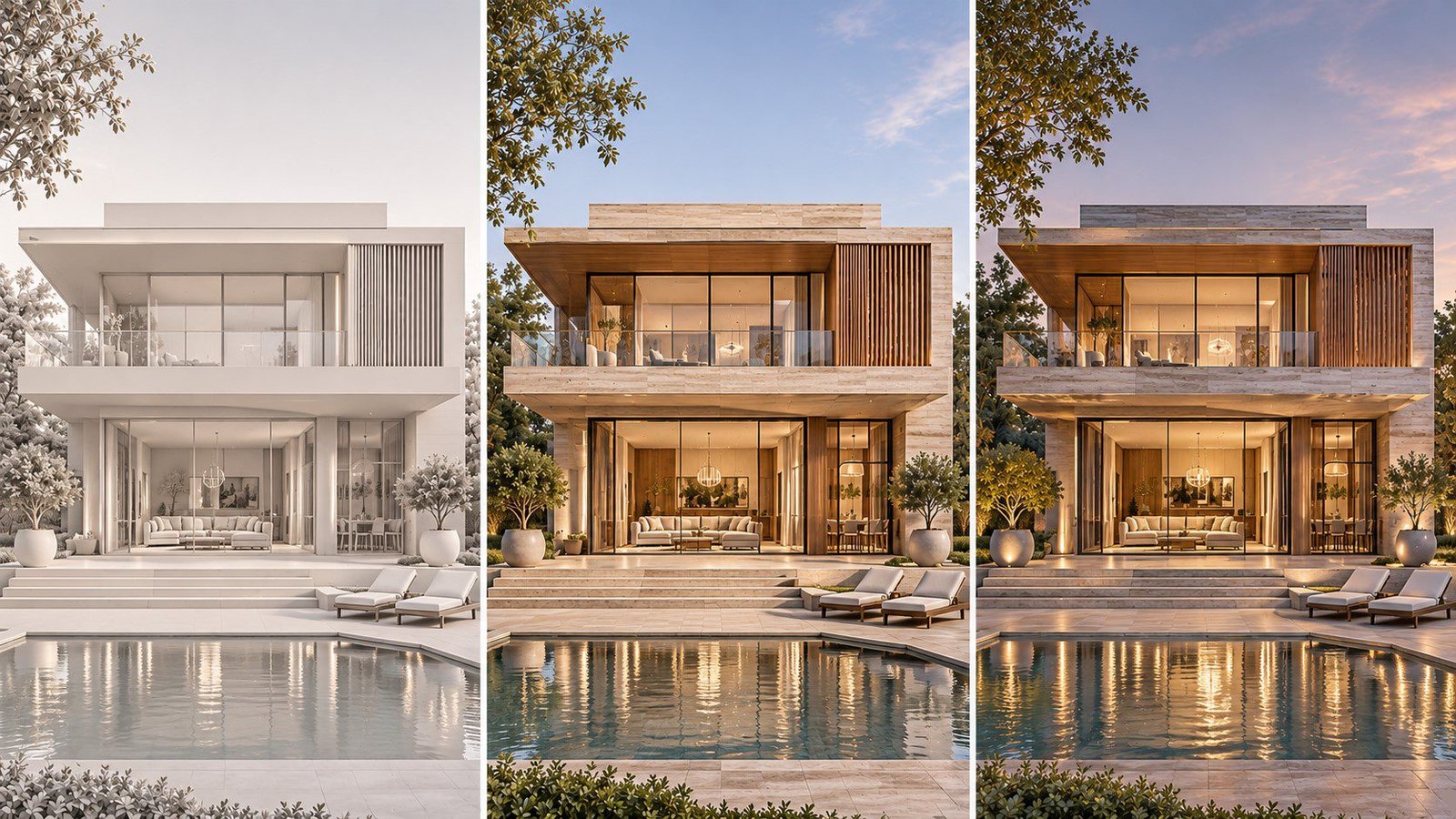
The key idea is the change-cost ladder. A change at gate one costs almost nothing. The same change at gate six may mean re-rendering the whole film.
| Gate | What You Approve | Cost of a Change Here |
|---|---|---|
| 1. Storyboard | Story, shots, and length | Very low |
| 2. Camera path | Where the camera moves | Low |
| 3. Clay render | Shapes, scale, and lighting angle | Medium |
| 4. Material preview | Finishes and colors | Medium to high |
| 5. Low-resolution animation | Timing, motion, and effects | High |
| 6. Final render and post-production | Color grade, sound, and delivery | Highest |
The cost levels are relative and illustrative. They show the direction of the ladder, not exact prices.
How to Use the Ladder
Spend your attention early. First, read the storyboard line by line. Next, check the camera path against the floor plan. Also confirm materials before the low-resolution pass. Finally, use the last gate only for small polish.

How Long Does Architectural Animation Take?
One published guide says a simple walkthrough takes about two weeks. A detailed film takes several weeks or longer. Late design changes extend the schedule.
Use the sample plan below as a starting point. It is illustrative and not a promise from any studio.
| Week | Studio Work | Your Job |
|---|---|---|
| Week 1 | Brief, storyboard, camera path | Send files; approve gates 1 and 2 |
| Week 2 | Modeling and clay render | Check scale and light; approve gate 3 |
| Week 3 | Materials and low-resolution animation | Approve gates 4 and 5 |
| Week 4 | Final render and post-production | Review color and sound; approve gate 6 |
| Week 5 | Buffer for fixes and delivery | Final files and handover |
Need still images sooner? Stills usually move faster than film. For a price view, read our guide to exterior 3D rendering cost.
Animation or Still Renders: Which Fits Your Goal?
Not every project needs a film. However, some goals clearly favor motion. So start with the decision you want the viewer to make.
- Choose animation when buyers must feel scale, flow, and sequence, such as a lobby that leads to a rooftop.
- Choose stills when you need fast listing images, brochure pages, or social posts.
- Choose both when you can reuse one model, because the base work is shared.
For example, a boutique hotel pitch may use three stills and a 45-second film. As a result, the investor sees the details first and the experience second. Also, stills made from the same model keep colors and light consistent with the film.
Who Uses Animation, and Why
Different teams buy animation for different reasons. Knowing your reason helps you set the length and the budget.
- Developers use it for off-plan launches and investor decks.
- Architects use it to win competitions and to explain design intent to boards.
- Agents use it to show a home that is not built yet.
- Contractors use it to explain phasing to clients and neighbors.
In each case, the film should answer one question. For instance, a developer might ask, “Will buyers see the view from the sixth floor?” Therefore, the camera should go there first.
What to Send for a Faster, Fairer Quote
A studio can only price what it can see. First, send plans, elevations, and 3D files if you have them. Second, add material and finish choices. Third, share two or three reference films you like. Finally, state the length, the deadline, and the main audience. As a result, you receive fewer follow-up questions and a tighter price.
What Slows an Architectural Animation Project?
Delays rarely come from rendering. Instead, they come from waiting.
- Incomplete files or missing material choices at the start.
- Design changes after the model is approved.
- Feedback that arrives in pieces from several people.
- A late decision on music, voiceover, or the final length.
- Complex scenes with heavy landscaping, crowds, or weather.
So name one decision-maker on your side. That single step removes most delays.
How to Lower Your Architectural Animation Cost
Published guides share six practical ways to save. Try them in this order.
- Write a detailed brief, including the post-production you need.
- Keep the film short and focused on key angles.
- Use ready-made models for secondary objects.
- Supply your own 3D models and drone footage of the site, if you have them.
- Agree on revision rounds before production starts.
- Order early, because rush projects cost more.
Newer tools also change cost. For an honest look at where automation helps and where it fails, read our AI walkthrough animation guide.
When Architectural Animation Is Not the Right Choice
Animation is a strong tool, but not always the right one. So be honest about its limits.
- It does not replace permit drawings. Offices review technical documents.
- It shows an artist’s impression, so label it that way in sales material.
- Late design changes can force expensive re-renders.
- A short listing may only need still images.
If buyers mostly need to understand layout, a 3D floor plan may do the job for less. If they want to explore alone, consider VR 360 tours. For live design reviews, real-time rendering lets you change views on the spot.
What to Ask Before You Book an Architectural Animation Studio
Use this list on every call. That way, you ask each studio the same questions.
- What is the price per finished second, and what does it include?
- How many revision rounds are included, and what does an extra round cost?
- Which approval gates will I see before the final render?
- What files do you need from me, and in what format?
- Who owns the 3D model and the final film?
- What is the schedule, in dated milestones?
- Can I order one short paid test before a full project?
Also watch for red flags. For instance, a price far below every other quote, no stated revision terms, and no preview stages all signal risk. One older guide also warns that very cheap overseas offers can bring quality problems.
If you plan to hire outside your team, our guide on how to outsource 3D rendering services explains how to choose a studio. You can also browse more cost guides in our architectural visualization hub.
Frequently Asked Questions About Architectural Animation
How much does architectural animation cost?
Published 2026 guides start architectural animation at about $2,200 per finished minute, or roughly $37 per second. Detailed work can reach $12,000 or more per minute. Other references list $50 to $200 per second. Length, detail, and revisions decide where you land.
How long does architectural animation take?
A simple animation takes about two weeks, according to one published guide. A detailed film takes several weeks or longer. Late design changes extend the schedule, so ask for a dated plan in writing.
What are the stages of architectural animation?
Published guides list a storyboard, camera path, clay render, material preview, low-resolution animation, final render, and post-production review. You approve each stage before the studio moves on.
Why do architectural animation quotes differ so much?
Quotes cover different scopes. One may include modeling, music, and three revision rounds. Another may exclude them. Compare the price per finished second and the list of inclusions, not only the total.
Is architectural animation worth it compared with still renders?
Stills show one moment. Animation shows movement through space, scale, and sequence. So animation suits launches, investor pitches, and approval boards. Stills often cost less and fit quick listings.
How can I reduce architectural animation cost?
Keep the film short and focused. Send a detailed brief and clean 3D files. Agree on revision rounds first. Order early to avoid rush fees. Use ready-made models for secondary objects.
Can animation replace permit drawings?
No. Animation supports planning, sales, and approvals. Permit offices still review technical drawings. Check your local rules, and label animation as an artist’s impression.
Conclusion: Plan Your Architectural Animation With Confidence
Architectural animation costs less when you plan it well. First, decide the length. Then prepare clean files. Finally, approve each gate with care, and keep late changes rare.
Published prices are only a starting point. However, every project differs, so ask for a written quote with seconds, revisions, and dates. Then compare studios on price per finished second.
Blue Ribbon 3D supports architects, developers, and agents with animation, still renders, floor plans, and tours. Request a quote to talk through your project. A good partner puts the scope in writing.