

The Future of Architectural Visualization: How AI Is Changing the Industry in 2026

Introduction
In 2026, architectural visualization studio teams are no longer just rendering buildings — they are using artificial intelligence to design, light, and animate entire projects in a fraction of the time it took just two years ago. What used to take a skilled artist several days can now be drafted by AI in minutes, then refined by human designers for accuracy and realism.
This shift is redefining what clients expect from a 3d rendering company. Faster turnarounds, lower costs, and higher realism are no longer premium add-ons — they are the new baseline. In this guide, we break down exactly how AI is reshaping architectural visualization, what it means for architects and real estate developers, and how to choose the right studio for your next project.
Quick Answer
| AI is transforming architectural visualization in 2026 by automating modeling, lighting, and rendering tasks — cutting production time by up to 70% while improving photorealism. Studios that combine AI tools with skilled human artists, like professional 3D rendering services in USA and India, are best positioned to deliver fast, accurate, and cost-effective results. |
What Is Architectural Visualization in the AI Era?
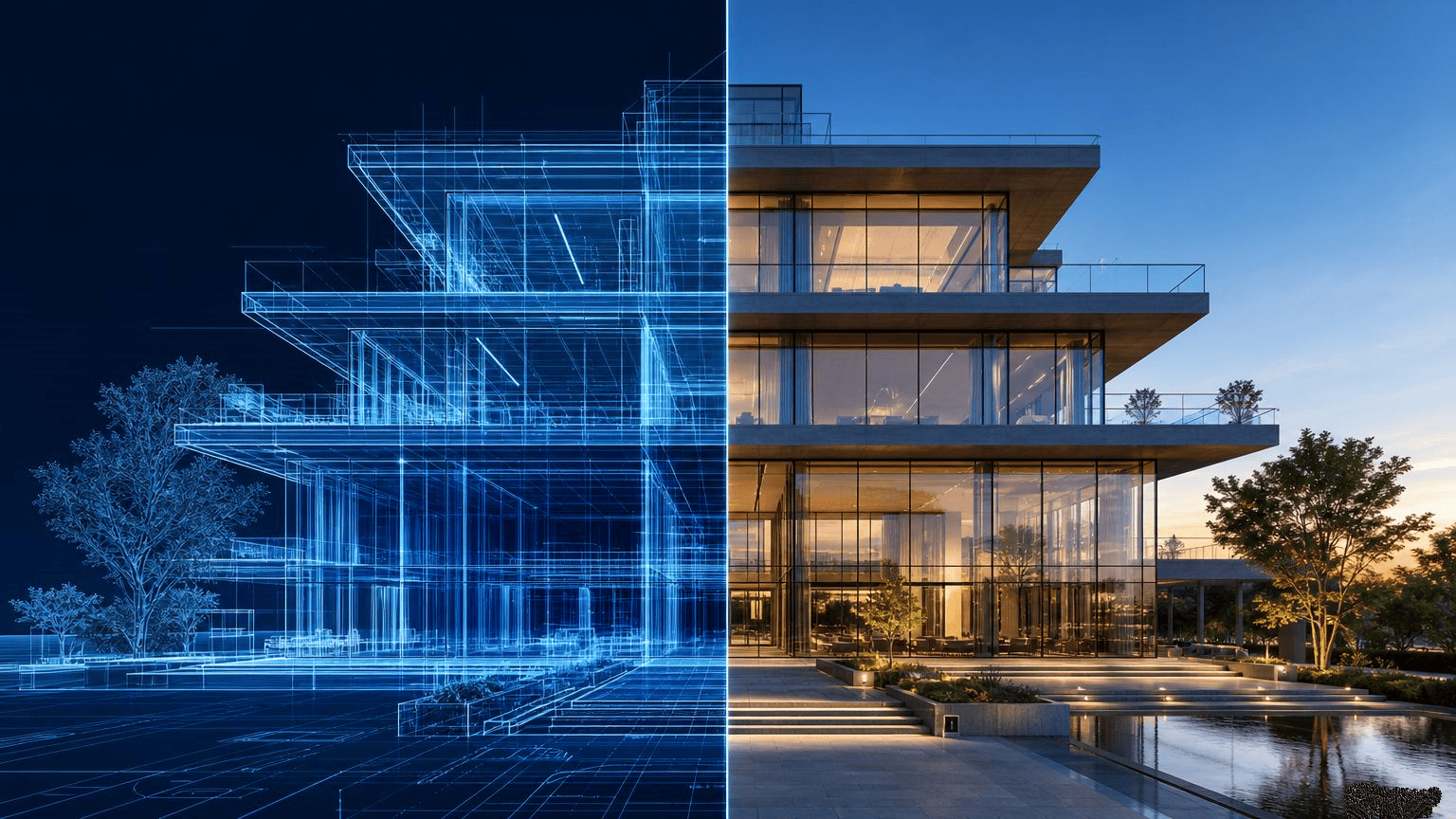
Architectural visualization is the process of turning 2D blueprints into realistic, 3D representations of a building — exteriors, interiors, walkthroughs, and floor plans. Traditionally, this required manual modeling, texturing, and lighting, often taking a 3d animation studio several days per project.
AI changes this workflow in three core ways:
- Automated base modeling from floor plans and sketches
- AI-assisted lighting and material realism, reducing manual trial-and-error
- Faster rendering through AI upscaling and denoising, cutting render farm time significantly
The result is not the replacement of human designers — it’s augmentation. Artists now spend more time on creative direction and client customization, while AI handles repetitive technical work.
Top AI Trends Reshaping 3D Rendering in 2026
1. AI-Powered Walkthrough Animation
AI agents can now generate full walkthrough animations from static floor plans, cutting production costs dramatically. This has made high-quality architectural rendering services accessible to smaller developers who previously couldn’t afford animated walkthroughs.
2. Real-Time Rendering & Instant Previews
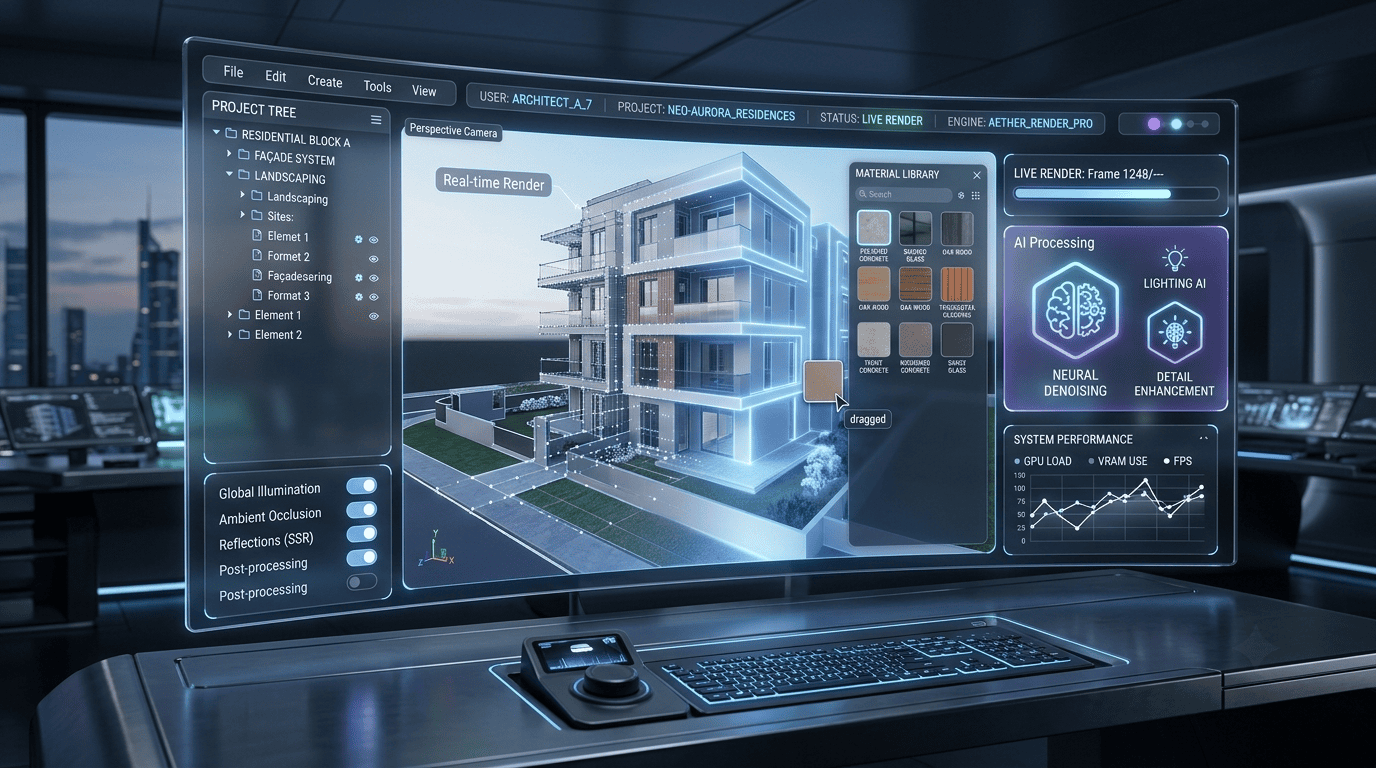
Real-time engines combined with AI denoising let clients see near-final quality renders during design review calls, instead of waiting days for a finished output. This is especially valuable for a 3d visualization company managing multiple international clients across time zones.
3. AI-Generated Material & Texture Libraries
Instead of manually sourcing and adjusting textures, AI tools now generate photorealistic materials — wood grains, fabrics, stone finishes — matched precisely to lighting conditions, saving hours of manual texture work per project.
4. Predictive Design Suggestions
Some AI platforms can now suggest layout or lighting improvements based on thousands of prior successful projects, helping architects and rendering teams make data-informed creative decisions.
5. Automated Revision Handling
AI tools can apply client-requested changes (color, furniture, lighting mood) automatically across multiple scenes, reducing the manual revision workload that traditionally slowed down delivery timelines.
Why Businesses Are Choosing Professional 3D Rendering Services in the USA
Real estate developers, architects, and brands across the US are increasingly relying on outsourced 3d rendering services USA providers because AI-powered studios can now match — and often exceed — the speed of in-house teams.
- Lower production costs without sacrificing photorealism
- Faster delivery timelines thanks to AI-assisted pipelines
- Access to specialized talent through a global 3D animation studio USA network
- Scalability during high-volume marketing seasons (property launches, trade shows)
This is why many US-based firms now search specifically for an architectural rendering company USA partner that understands both local design standards and global AI-driven production efficiency.
How to Choose the Best 3D Rendering Company in the USA
With so many studios now claiming “AI-powered” workflows, it’s important to evaluate providers carefully. Here’s what actually separates the best 3d rendering company in usa from the rest:
- Portfolio depth — look for consistent quality across exterior, interior, and walkthrough work
- Transparent pricing and revision policy, with no hidden AI-tool surcharges
- Proven turnaround times backed by client reviews, not just marketing claims
- A hybrid workflow — AI speed combined with human quality control
When comparing the best 3d rendering company options for your project, always request a sample render in your specific style before committing to a full contract.
Should You Outsource 3D Rendering Services in 2026?
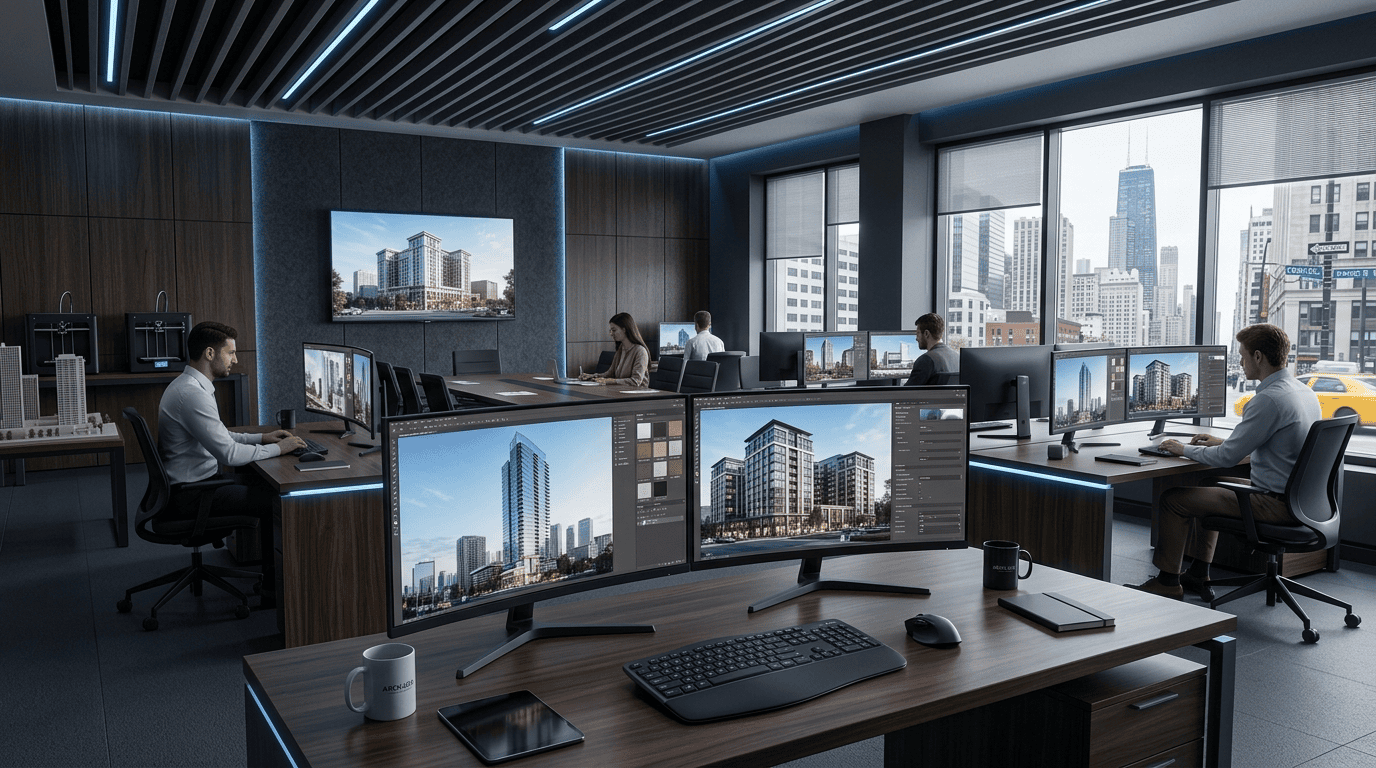
As AI tools lower production costs globally, more US and European firms are choosing to outsource 3d rendering services to specialized studios rather than maintaining expensive in-house teams. Here’s a quick breakdown:
Factor | In-House Team | Outsourced Studio |
Cost | High (salaries, software, hardware) | 40–60% lower on average |
Scalability | Limited by team size | Flexible, scales with project volume |
Turnaround | Depends on internal bandwidth | Often faster via dedicated AI pipelines |
Frequently Asked Questions
Will AI replace human 3D artists?
No. AI automates repetitive technical tasks like base modeling and lighting setup, but human artists remain essential for creative direction, client customization, and final quality control.
How much do professional 3D rendering services cost in 2026?
Costs vary by project complexity, but AI-assisted workflows have reduced average pricing by 20–40% compared to fully manual production, while improving turnaround speed.
What should I look for in a 3D rendering company?
Check portfolio consistency, transparent pricing, realistic turnaround promises, and whether the studio uses a hybrid AI-plus-human workflow for quality assurance.
Is it safe to outsource 3D rendering to international studios?
Yes, as long as the studio has a verifiable portfolio, clear communication process, and secure file-handling practices. Request references and sample work before signing a contract.
Ready to Work With an AI-Powered Visualization Studio?
Blue Ribbon 3D combines AI-driven efficiency with 14+ years of human design expertise to deliver photorealistic renders for clients worldwide. Get a free project quote here.
Contact Us Today:
WhatsApp: +91 96244 65429
Email: info@blueribbon3d.com
Website: blueribbon3d.com