Why AR-Ready 3D Models Are the Future of Online Shopping

The gap between “adding to cart” and “checking out” often comes down to one simple hesitation: “But how will it look in my space?”
For years, e-commerce giants and boutique retailers alike have struggled to replicate the tactile confidence of in-store shopping. Unfortunately, we live in an era where consumers demand certainty. Static images—no matter how high-resolution or professionally lit—lack context. Specifically, they cannot show scale, they cannot show how light interacts with a fabric, and they certainly cannot prove that a sofa will fit through a doorway.
This is where AR-Ready 3D Models come in.
Augmented Reality (AR) product visualization is no longer a futuristic gimmick reserved for tech demos; on the contrary, it is rapidly becoming the standard for successful online retail. From visualizing a velvet sofa in a living room to checking the finish of a lamp on a bedside table, AR is reshaping consumer behavior.
Below, we explore why investing in high-quality AR 3D models is the most critical trend for e-commerce growth in 2025 and beyond.
1. The “Try-Before-You-Buy” Revolution
Currently, the biggest friction point in online shopping, especially for furniture and home decor, is the “imagination gap.” When a customer looks at a photo on a white background, they are forced to do mental gymnastics to imagine that object in their home.
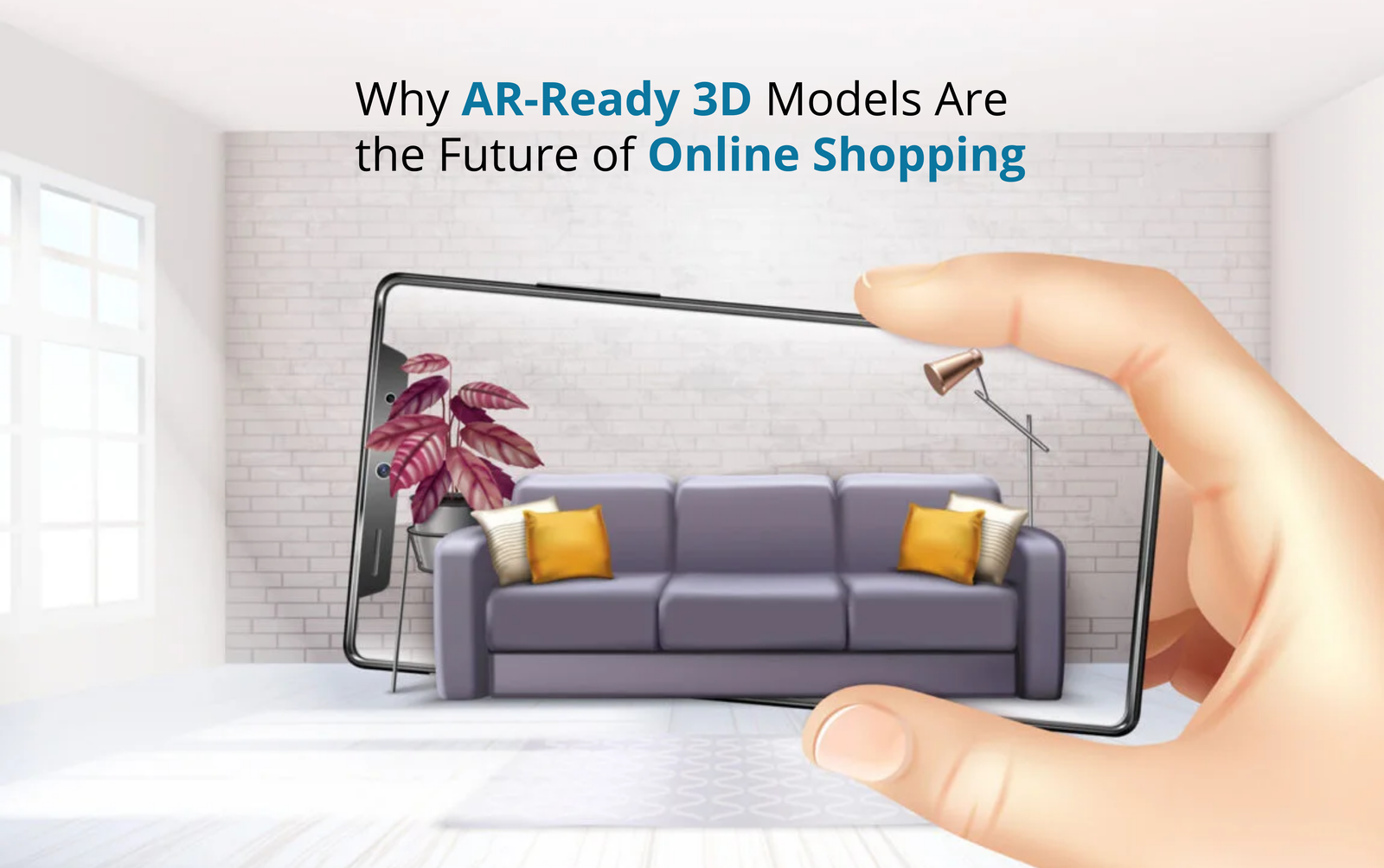
Fortunately, AR-ready 3D models bridge this gap by allowing users to place digital products directly into their physical environment using a smartphone camera. Consequently, this transforms a passive viewing experience into an active one.
-
The Psychological Shift: For instance, when a user places an AR object in their room, a psychological phenomenon known as the “endowment effect” kicks in. By virtually placing the item in their personal space, they begin to feel a sense of ownership before they have even paid for it.
-
The Stat: In fact, Shopify data suggests that products with AR capabilities see a 94% higher conversion rate than those without.
2. Drastically Reducing Return Rates
Moreover, returns are the silent profit-killer of e-commerce. In the furniture industry alone, return rates can be staggering, with “item didn’t fit” or “looked different in person” being the top reasons.
To combat this, high-fidelity 3D rendering ensures that the digital twin of your product is photorealistic. When customers use AR to inspect a product from every angle and assess its size in their actual room, their expectations match reality.
-
Sustainability Impact: Additionally, beyond just saving money on logistics and restocking fees, reducing returns is a massive sustainability win. Fewer returns mean fewer delivery trucks on the road and less packaging waste. Since modern consumers are increasingly eco-conscious, offering AR tools that prevent wasteful returns is a strong brand value proposition.
-
Trend Insight: As a result, retailers implementing AR visualization have reported a reduction in return rates by up to 40%.
3. WebAR: Accessibility Without Apps
Historically, in the early days of AR, brands required consumers to download clunky, dedicated apps to view products. However, this was a major barrier to entry; most users won’t download an app just to view a coffee table.
The future is undoubtedly WebAR (Web-based Augmented Reality).
Now, modern AR-ready models can be viewed directly through a mobile browser. A customer simply clicks a button on your product page, and the camera opens instantly. Therefore, this frictionless experience is crucial for keeping bounce rates low and engagement high.
-
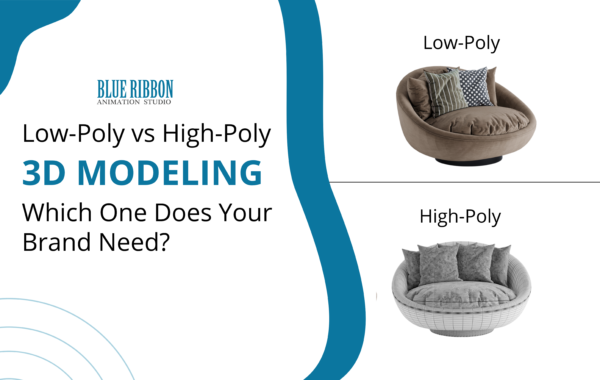
Tech Tip: Nevertheless, to achieve this, you need optimized low-poly 3D models that load instantly without sacrificing visual quality. This is a delicate balance that professional 3D modeling studios specialize in.
4. Customization and Personalization
On the other hand, static photography limits you to showing one or two variations of a product because photographing every color combination is expensive and time-consuming. In contrast, 3D models unlock the power of configurators.
With AR, shoppers can swap textures, change colors, and modify finishes in real-time. Whether it’s changing a chair from leather to fabric or testing a matte black finish versus gold, interactive 3D models empower the customer to “build” their perfect product.
Ultimately, this interactivity keeps users on your website longer and significantly boosts the likelihood of a sale by allowing the customer to create a product that feels unique to them.
5. The Omnichannel Advantage: Use Your Assets Everywhere
Furthermore, one of the hidden benefits of investing in AR-ready 3D models is their versatility. Once you have a high-quality 3D model of your product, it isn’t just for your website.
-
Social Media: First, you can use these models to create Instagram or Snapchat filters, allowing users to interact with your products on social platforms.
-
Marketing Materials: Similarly, the same 3D model used for AR can be used to render high-resolution photorealistic images for catalogs, banners, and ads, saving you the cost of physical photoshoots.
-
Video Content: Finally, 3D assets can be animated for promotional videos without ever needing a physical prototype.
6. Why Quality Matters: The Danger of “Bad” AR
As AR becomes more common, however, customer standards are rising. A low-quality, cartoonish 3D model can actually hurt your brand perception. For example, if the fabric looks like plastic or the dimensions look off, the customer will assume the physical product is also low quality.
Therefore, to leverage this technology effectively, you don’t just need 3D models; you need photorealistic assets. The lighting, texture mapping, and geometry must be precise. This is why partnering with a specialized animation and rendering studio becomes essential.
The Verdict: Adapt or Get Left Behind
In conclusion, the “future” of online shopping is already happening. As major players like IKEA and Amazon normalize AR shopping, consumers are beginning to expect it from every retailer.
By 2025, AR is no longer a “nice-to-have” feature—it is a competitive necessity. It builds trust, reduces costs, and creates a shopping experience that static photography simply cannot match.
Ready to transform your product catalog? At Blue Ribbon 3D, we specialize in creating photorealistic, AR-ready 3D assets that drive sales. From high-poly marketing renders to low-poly models for WebAR, we help you bring your products to life with precision and style.
[View Our Portfolio] | [Contact Us for a Quote]