Photorealistic Rendering vs Traditional Photography: A Complete Cost Comparison

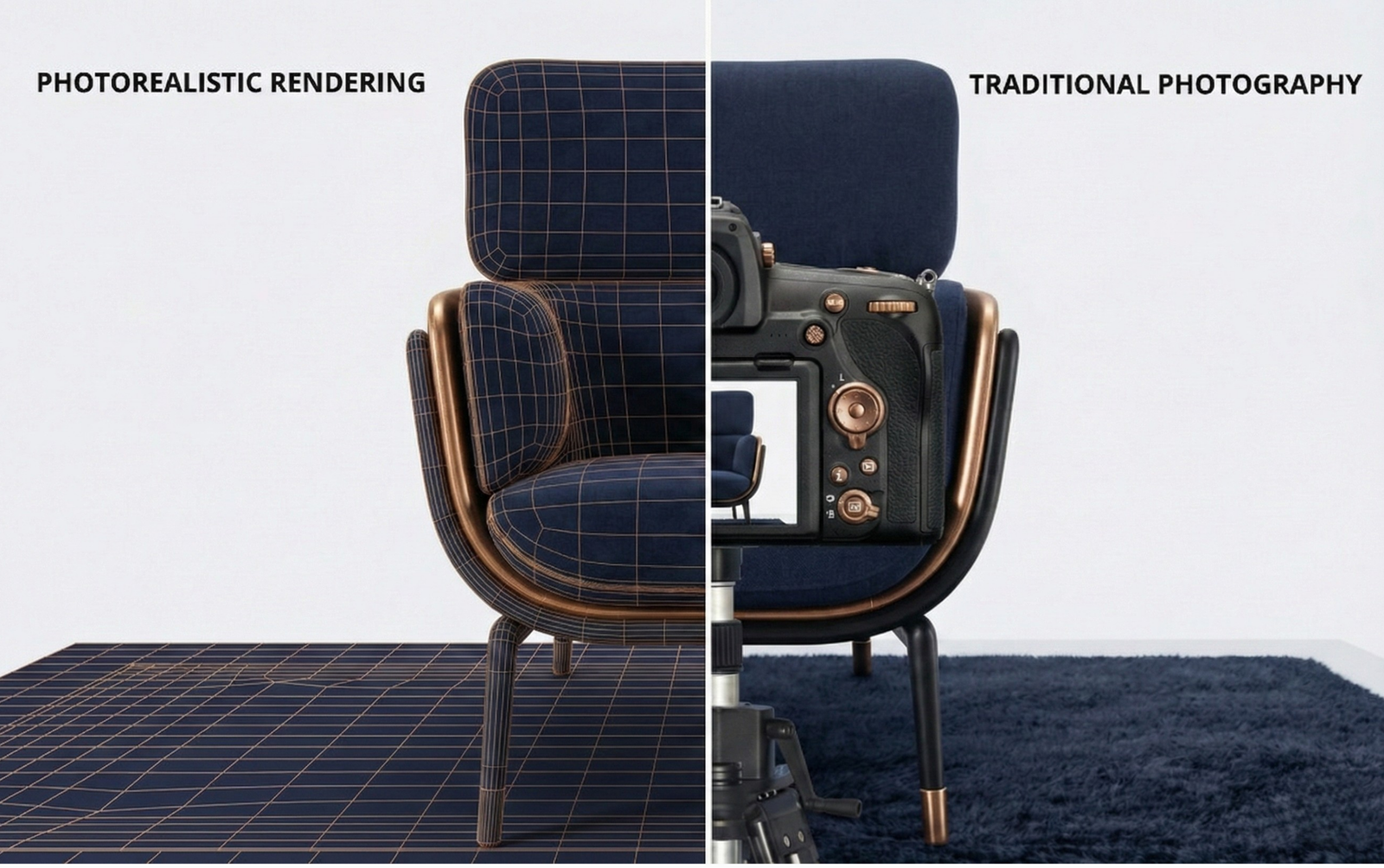
Photorealistic rendering vs traditional photography is a critical comparison for high end interior designers and custom furniture brands. Visual presentation directly influences customer trust, brand value, and purchase decisions. While traditional photography has long been used to showcase furniture products, photorealistic 3D rendering now offers a more flexible, cost effective, and scalable solution for modern furniture marketing.
Hidden Costs of Traditional Furniture Photography
At first glance, professional photography may seem affordable. However, many additional costs appear during execution.
1. Logistics and Shipping Expenses
Transporting large or luxury furniture pieces to a studio is expensive and risky.
-
Specialized transport is required for heavy furniture
-
Insurance is needed for high value products
-
Damage during transit can delay launches or require repairs
These risks increase both cost and stress for furniture brands.
2. Studio Rental and Physical Set Creation
Lifestyle photography requires realistic interior environments.
-
Studio space rental
-
Set construction and prop sourcing
-
Designers, stylists, and labor costs
A single room setup can consume a large portion of the marketing budget and is usually usable only once.
3. Limited Flexibility and Reshoot Costs
Traditional photography offers little room for changes.
-
Lighting adjustments require reshoots
-
Fabric or color changes need new photography
-
Recreating the same setup later is costly
This lack of flexibility increases production time and expenses.
Photorealistic Rendering Advantages Over Photography
Photorealistic 3D rendering removes many of the limitations of physical photoshoots while maintaining premium quality.
1. No Shipping or Physical Risk
With 3D rendering, products exist digitally.
-
No transport or insurance costs
-
No risk of product damage
-
Ability to market designs before manufacturing
This is especially valuable for custom furniture brands.
2. Digital Environment Creation
Virtual environments replace physical studio sets.
-
Unlimited interior styles and locations
-
No travel or construction costs
-
Access to digital decor and prop libraries
A single scene can be reused and modified multiple times.
3. Scalable Variations at Low Cost
Once a 3D model is created, producing variations becomes simple.
-
Multiple fabric and material options
-
Unlimited color combinations
-
Different camera angles and close ups
This level of flexibility is not practical with traditional photography.
Cost Comparison Between Photography and 3D Rendering
Traditional Photography Costs
-
Multiple physical prototypes
-
Two way shipping
-
Studio and crew fees
-
Image retouching
Total cost is high with longer production timelines.
3D Rendering Costs
-
One time 3D modeling
-
Multiple renders from the same model
-
No studio or logistics expenses
Total cost is often thirty to fifty percent lower with faster delivery.
Additionally, 3D assets can be reused for future catalogs, making long term returns significantly higher.
Importance of 3D Furniture Silo Rendering
3D furniture silo rendering shows products on a clean background and is essential for
-
Ecommerce listings
-
Product catalogs
-
Technical specification sheets
With 3D rendering, lighting and angles remain consistent across the entire product range. Every detail stays sharp and visually accurate, which improves product perception and buyer confidence.
Conclusion
When comparing photorealistic rendering vs traditional photography, 3D visualization clearly provides better flexibility, lower costs, and higher long term value.
For furniture brands and interior designers aiming to scale marketing efforts while maintaining premium presentation, 3D rendering is the smarter investment.
By switching to digital product visualization, brands can eliminate logistical limitations and focus on creativity, consistency, and conversions.