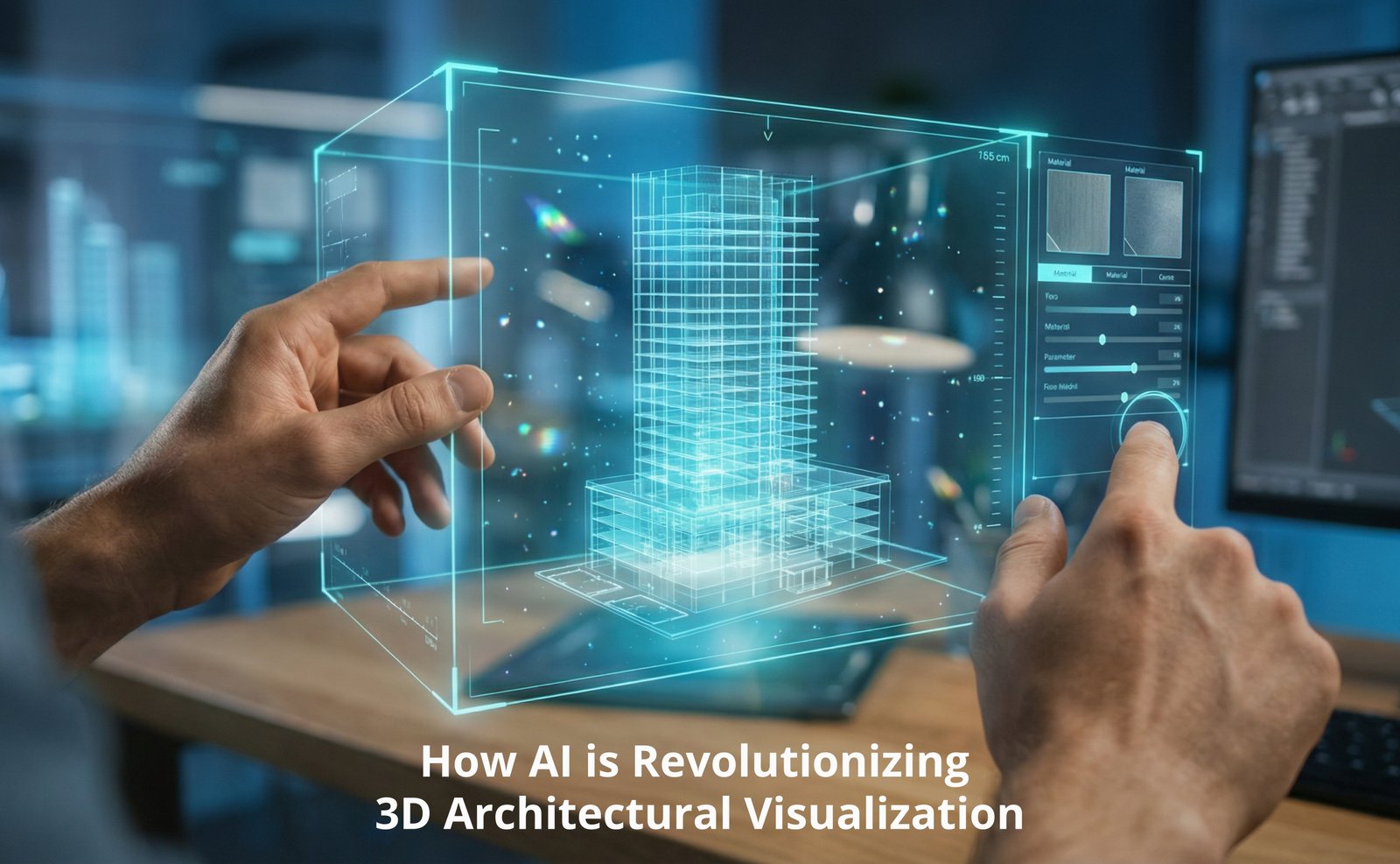
How AI is Revolutionizing 3D Architectural Visualization

The real estate and design industries are evolving rapidly. Specifically, the demand for faster, more realistic designs is currently at an all-time high. Consequently, professionals across the globe are constantly looking for innovative solutions to meet these growing expectations. In recent years, artificial intelligence has boldly stepped in to bridge this technological gap. Therefore, understanding exactly how AI is revolutionizing 3D architectural visualization is no longer just optional; it is absolutely essential for business growth. Ultimately, AI 3D rendering successfully helps architects, builders, and real estate developers achieve dramatically faster approvals, significantly lower costs, and higher sales. Moreover, this transformation is driven through a perfect combination of smart automation, unmatched visual realism, and incredible processing speed.
The Evolution of 3D Architectural Visualization Through AI 3D Rendering
Traditional rendering processes were notoriously time-consuming and labor-intensive. For instance, rendering a single high-quality image could literally take hours or even entire days to complete. However, the recent introduction of AI 3D rendering has drastically shifted this outdated paradigm. Now, intelligent algorithms can effortlessly process complex lighting, detailed textures, and intricate geometry in a mere fraction of the usual time. Furthermore, this brilliant automation allows human designers to focus heavily on pure creativity rather than tedious technical troubleshooting. As a result, the entire workflow of 3D architectural visualization becomes exponentially more efficient. Additionally, the sheer level of photorealism that can be achieved today is virtually indistinguishable from actual, high-end photography.
Achieving Faster Approvals with AI-Powered 3D Architectural Visualization
Getting project approvals from anxious clients or strict local zoning boards is often a massive bottleneck. Typically, stakeholders struggle greatly to visualize the final real-world outcome from basic 2D blueprints alone. On the other hand, presenting a lifelike AI 3D rendering instantly clarifies the entire design intent. Additionally, if a client requests a sudden, unexpected change, advanced AI tools allow for incredibly rapid modifications. Consequently, designers can easily adjust lighting, swap out exterior materials, or alter interior furniture layouts in near real-time. Because of this, key decision-makers can confidently approve complex designs right on the spot. Thus, adopting AI-driven 3D architectural visualization significantly accelerates the entire pre-construction phase.
How AI 3D Rendering Lowers Costs for Architects and Builders
Strict budget constraints are a constant, heavy burden in modern real estate development. Traditionally, hiring a massive team to create multiple renders required a gigantic financial investment. In contrast, modern AI 3D rendering dramatically lowers these day-to-day operational expenses. First and foremost, intelligent automation completely eliminates the countless billable hours usually spent on manual detailing. Similarly, it severely minimizes the likelihood of extremely costly errors happening during the actual physical construction phase. By catching structural and design flaws early in the 3D architectural visualization stage, builders successfully avoid expensive rework down the line. Therefore, investing in AI-driven tools yields a genuinely remarkable return on investment. In short, development teams get vastly superior visuals for just a fraction of the traditional cost.
Maximizing Real Estate Sales Using Photorealistic AI 3D Rendering
Selling properties long before they are even built is the ultimate, primary goal for ambitious real estate developers. Undoubtedly, high-quality, engaging visuals are the main key to unlocking these highly profitable pre-sales. Specifically, prospective buyers need to feel a strong emotional connection to a space before signing any binding contract. Thankfully, AI 3D rendering seamlessly creates immersive, emotionally compelling imagery that instantly captivates potential buyers. Moreover, forward-thinking developers can actively use these digital renders to beautifully stage completely empty rooms. For example, showcasing a warmly furnished space helps buyers easily envision their future daily life in that home. Consequently, leveraging advanced 3D architectural visualization directly leads to much faster sales cycles and significantly higher closing rates.
Automation and Speed: The Core of Modern 3D Architectural Visualization
In today’s aggressively competitive market, overall speed is just as important as high quality. Historically, balancing those two crucial elements was nearly impossible for most firms. Nevertheless, modern AI 3D rendering successfully delivers both critical factors simultaneously. Through sophisticated machine learning, modern rendering software can now accurately predict exactly how natural light interacts with specific building materials. As a result, the digital system completely automates the absolute most tedious, repetitive parts of the rendering process. Additionally, this incredible, unprecedented speed easily enables marketing teams to launch their promotional campaigns weeks or even whole months ahead of their original schedule. Consequently, builders and developers gain a massive, highly lucrative competitive advantage.
The Future of AI 3D Rendering in the Real Estate Industry
Looking ahead to the next decade, the deep integration of artificial intelligence will only continue to expand. In fact, we are already seeing the exciting emergence of smart AI tools that can generate complete 3D models from simple text prompts alone. Furthermore, fully interactive virtual tours powered seamlessly by AI will soon become the universal industry standard. Therefore, proactively adopting AI 3D rendering today actively prepares your firm for the grand innovations of tomorrow. Ultimately, those who bravely embrace the future of 3D architectural visualization will undoubtedly dominate the real estate market.
Conclusion
To summarize, artificial intelligence is fundamentally and permanently changing exactly how we design, build, and eagerly sell new properties. Clearly, AI 3D rendering offers unparalleled, world-class benefits, including much faster project approvals, significant operational cost reductions, and vastly increased property sales. Moreover, the flawless, stunning realism reliably provided by AI-enhanced 3D architectural visualization boldly sets an entirely new standard of excellence for the industry. If you truly want to elevate your architectural presentations and finally close high-value deals faster, utilizing professional rendering services is your absolute best asset. Finally, visit Blue Ribbon 3D today to discover exactly how our cutting-edge, AI-assisted visualization solutions can beautifully bring your next big project to life.